-
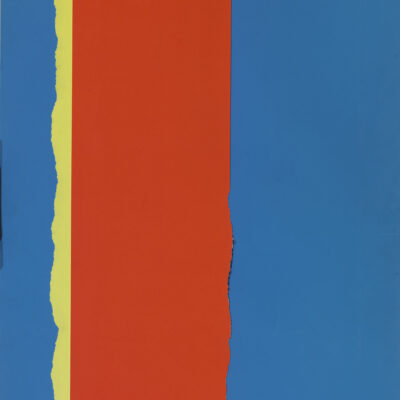
Stephen ANTONAKOS Greek / American, 1926-2013 Untitled collage (JA#3) Berlin torn and cut silkscreen paper, on silkscreen paper signed and dated 1980 on the reverse 73.5 x 56 cm
-
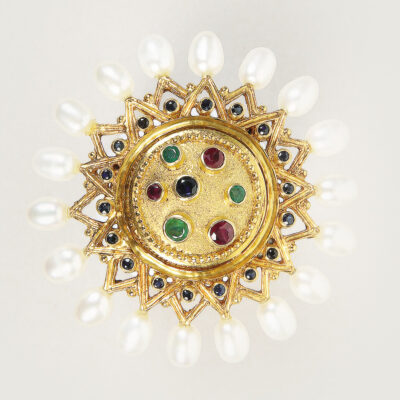
Ilias LALAOUNIS Greek jeweller Grecian shield brooch 18 carat yellow gold ruby, blue sapphire, emerald and cultured pearl weight 15.5 gr. 4.5 cm diameter
-
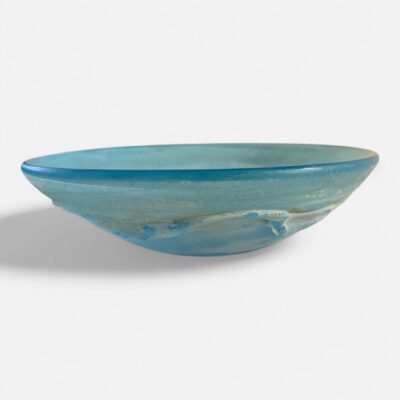
A Murano glass scavo bowl by Seguso Vetri d’Arte, produced between the mid-1970s and early 1980s. The scavo technique lends an antique look to the object, making it appear as if it has been excavated from under soil, which is typical of glass objects found during archaeological diggings.
35cm ⌀ × 10.5cm H
Signed to the base.
-
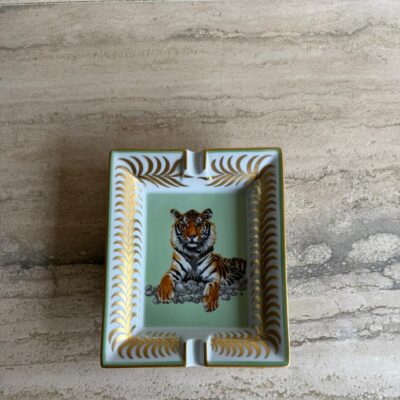
A hand-painted porcelain tray by Hermès, produced in Limoges and decorated in gold and green with the Tigre Royal motif. The design centres on a richly detailed tiger’s head, framed by a gilded border. Limoges porcelain has long been favoured by Hermès for its refinement of surface and depth of colour, and in this example the precision of the painting underscores the house’s meticulous approach to decorative objects.
20cm W × 16cm D × 3.5cm H
-
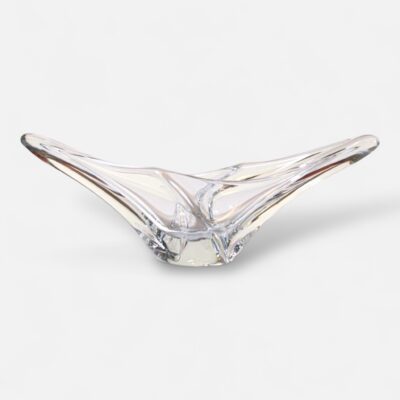
A sculptural fruit bowl by Daum, France, produced in the 1960s. Its oblong form tapers to rounded ends, the body rising in curvilinear sweeps that catch and refract the light with the maison’s signature clarity. The restrained silhouette is elevated by the hand-finished fluidity of mid-century French art glass, a testament to Daum’s mastery of form without ornament.
XX cm W × XX cm D × XX cm H
Marked on the base in diamond point: Daum.
-
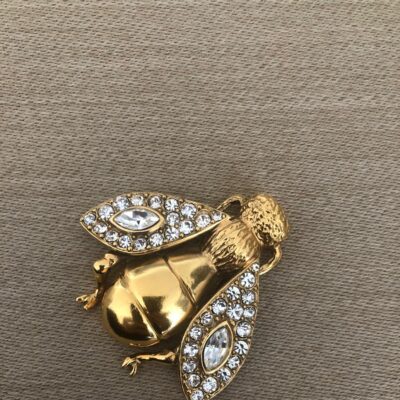
An iconic bee brooch by Christian Dior, produced in the 1980s and set with jewelled accents in the house’s characteristically refined palette. The bee motif—at once a symbol of industry, elegance, and imperial favour—has been a recurring theme in Dior’s decorative lexicon since the mid-20th century, echoing both couture detailing and historic regalia.
XX cm W × XX cm D
Marked Dior to the reverse.
-
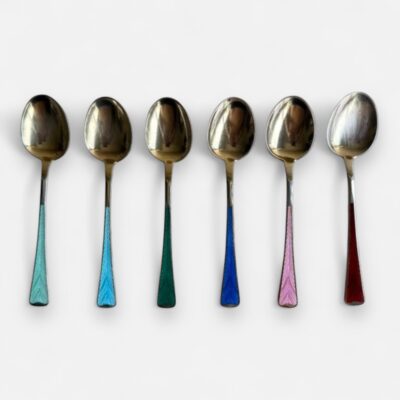
A set of six mid-century demitasse spoons by the Norwegian jeweller and silversmith J. Tostrup, each decorated with a guilloché enamel surface. Marked Sterling, J. Tostrup, Norway, the set reflects the firm’s reputation for precision workmanship and refined decorative detail, qualities that made Tostrup a leading name in Scandinavian silver throughout the 20th century.
9.5cm L
-
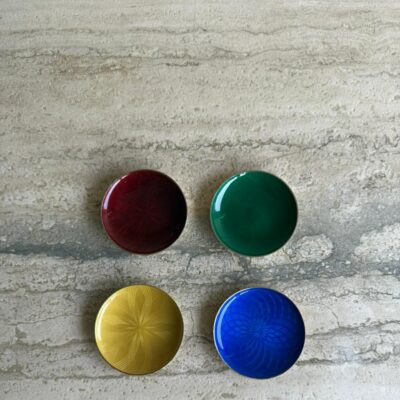
A set of four mid-century sterling silver dishes by the Norwegian jeweller and silversmith J. Tostrup, each decorated with a guilloché enamel surface. Marked Sterling, J. Tostrup, Norway to the reverse, the set reflects the firm’s reputation for precision workmanship and refined decorative detail, qualities that made Tostrup a leading name in Scandinavian silver throughout the 20th century.
6.5cm ⌀ each
-
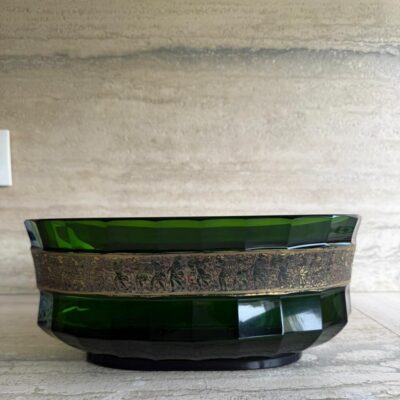
An early 20th-century crystal centrepiece by Moser, produced in Karlsbad, Czechoslovakia between 1918 and 1922. Marked on the base in diamond point: Made in Czechoslovakia, Moser, Karlsbad. The bowl is richly decorated with a wide frieze of marching warriors, rendered in gold against the clarity of cut crystal—a commanding motif that bridges Art Nouveau ornament with historicist themes.
30cm W × 16cm D × 13cm H
-
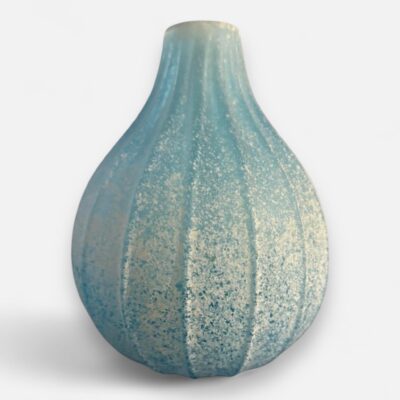
A Murano glass scavo vase by Seguso Vetri d’Arte, produced between the mid-1970s and early 1980s. The scavo technique lends an antique look to the object, making it appear as if it has been excavated from under soil, which is typical of glass objects found during archaeological diggings.
17cm ⌀ × 22cm H
Unsigned.