-
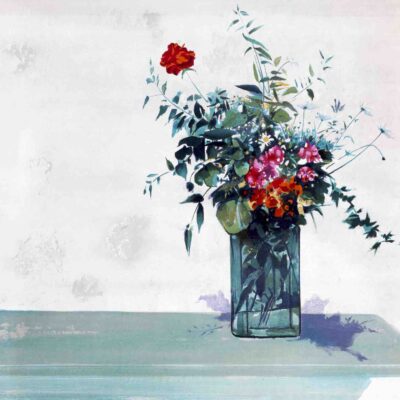
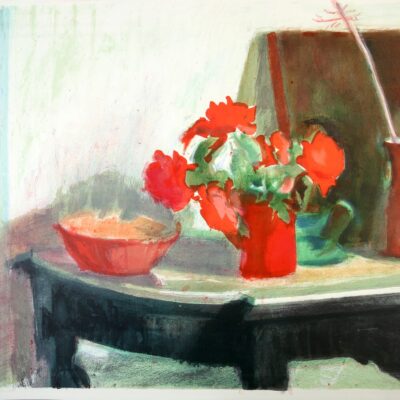
silkscreen on paper signed lower right numbered 165/170 lower left 60 x 82 cm unframed
-
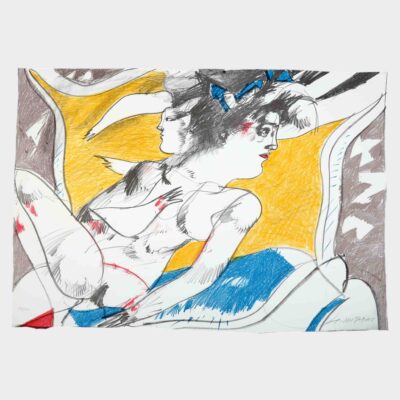
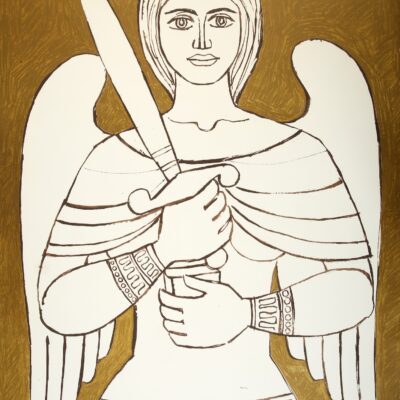
silkscreen on paper signed lower right numbered 203/240 lower left 50 x 70 cm unframed
-
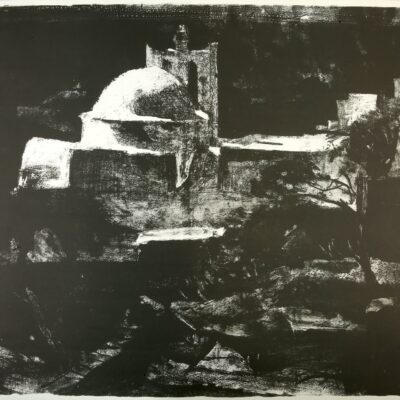
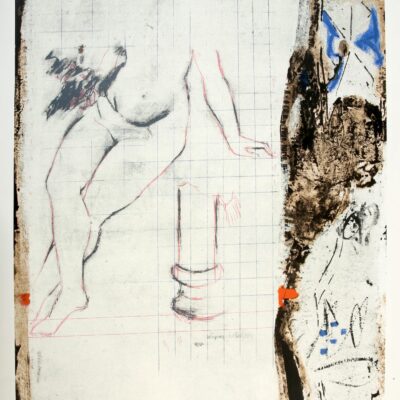
silkscreen on paper signed lower right numbered 176/190 lower left 59 x 80 cm unframed
-
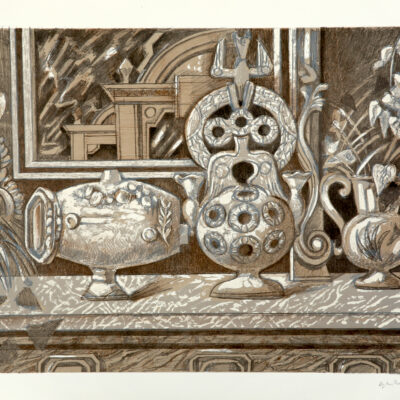
copper engraving on paper signed lower right numbered 57/60 lower left 62 x 90 cm circa 1970 unframed
-
silkscreen on paper signed lower right numbered 228/240 lower left 86 x 60 cm unframed
-
silkscreen on paper signed lower right numbered 85/150 lower left 60 x 85 cm unframed
-
silkscreen on paper signed lower left numbered 178/240 lower left 94 x 69 cm unframed
-
silkscreen on paper signed lower right numbered 139/195 lower left 89 x 70 cm unframed
-
silkscreen on paper signed lower right numbered 194/240 lower left 70 x 50 cm unframed
-
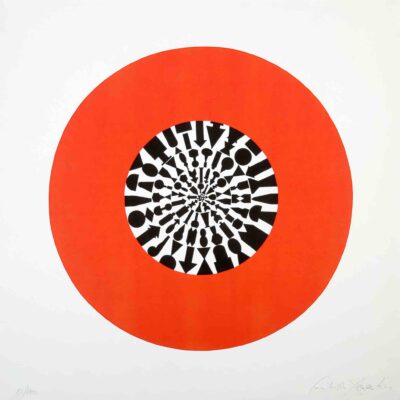
silkscreen on paper signed lower right numbered 61/200 lower left 50 x 50 cm unframed
-
A pair of mid-to-late 20th-century clip-on earrings by Fabrice Paris, each set with lustrous mother-of-pearl plaques in a polished gilt metal surround. The cool iridescence of the shell contrasts with the warmth of the mount, creating a quietly opulent look that captures the era’s chic costume jewellery aesthetic.
XX cm W × XX cm D
Marked, Fabrice Paris.
-
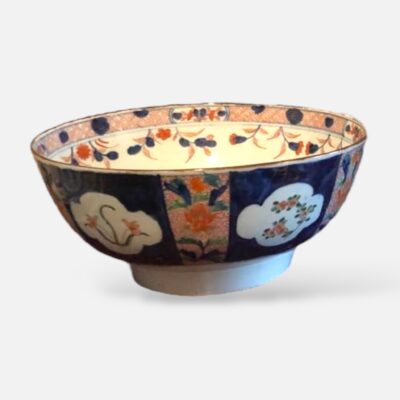
A generously proportioned Imari bowl, circa 1900, painted in the traditional palette of iron red, cobalt blue, and gilt over a white ground. The exterior and interior panels are decorated with stylised florals and geometric reserves, a composition that balances bold colour with refined detail in the late-Meiji manner. The generous size makes it as suited to the table as to display, embodying the enduring appeal of Imari ware in both East and West.
XX cm Ø × XX cm H
-
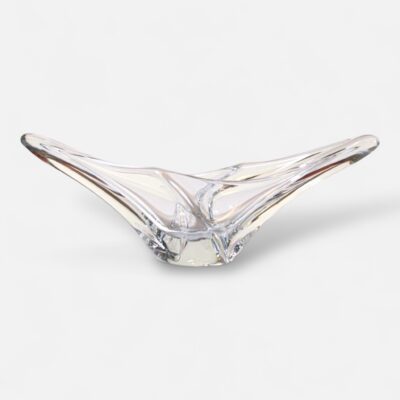
A sculptural fruit bowl by Daum, France, produced in the 1960s. Its oblong form tapers to rounded ends, the body rising in curvilinear sweeps that catch and refract the light with the maison’s signature clarity. The restrained silhouette is elevated by the hand-finished fluidity of mid-century French art glass, a testament to Daum’s mastery of form without ornament.
XX cm W × XX cm D × XX cm H
Marked on the base in diamond point: Daum.
-
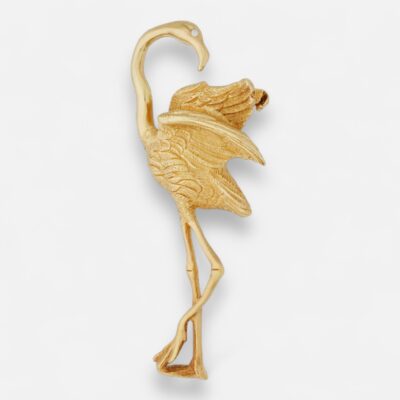
A flamboyant flamingo brooch by Christian Dior, produced in the 1980s and realised in the house’s signature jewelled style. The flamingo—its neck elegantly arched and plumage rendered in vivid enamel and crystal—captures the era’s flair for bold, figural costume jewellery that straddled the line between whimsical ornament and haute couture accessory.
7.5 cm W × XX cm D
Marked Chr Dior to the reverse.
-
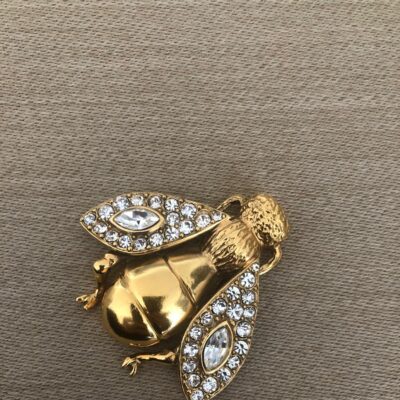
An iconic bee brooch by Christian Dior, produced in the 1980s and set with jewelled accents in the house’s characteristically refined palette. The bee motif—at once a symbol of industry, elegance, and imperial favour—has been a recurring theme in Dior’s decorative lexicon since the mid-20th century, echoing both couture detailing and historic regalia.
XX cm W × XX cm D
Marked Dior to the reverse.
-
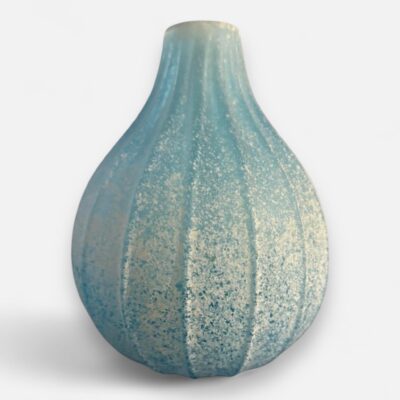
A Murano glass scavo vase by Seguso Vetri d’Arte, produced between the mid-1970s and early 1980s. The scavo technique lends an antique look to the object, making it appear as if it has been excavated from under soil, which is typical of glass objects found during archaeological diggings.
17cm ⌀ × 22cm H
Unsigned.
-
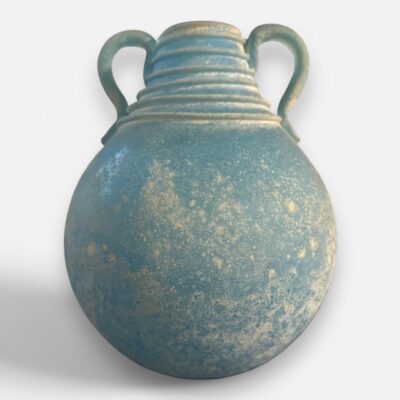
A Murano glass scavo vase by Seguso Vetri d’Arte, produced between the mid-1970s and early 1980s. The scavo technique lends an antique look to the object, making it appear as if it has been excavated from under soil, which is typical of glass objects found during archaeological diggings.
20cm ⌀ × 24.5cm H
Unsigned.
-
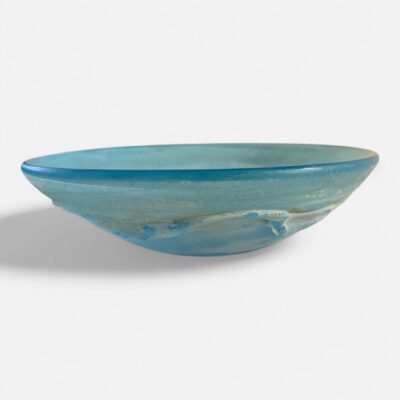
A Murano glass scavo bowl by Seguso Vetri d’Arte, produced between the mid-1970s and early 1980s. The scavo technique lends an antique look to the object, making it appear as if it has been excavated from under soil, which is typical of glass objects found during archaeological diggings.
35cm ⌀ × 10.5cm H
Signed to the base.
-
Out of stock
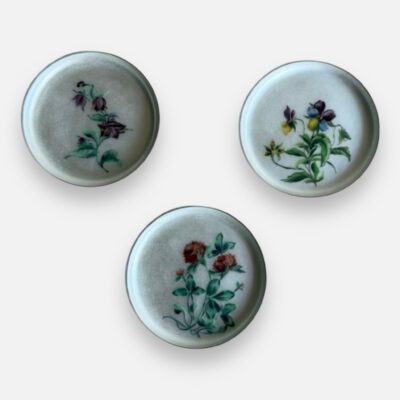
A set of three mid-century sterling silver dishes by the Danish silversmith Anton Michelsen, marked A. Michelsen, Sterling, Denmark to the reverse. Each is covered in white enamel and hand-painted with floral motifs, the delicate brushwork contrasting with the precision of the underlying silver form.
7cm ⌀ each
-
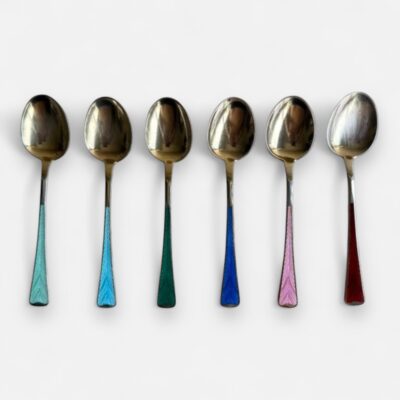
A set of six mid-century demitasse spoons by the Norwegian jeweller and silversmith J. Tostrup, each decorated with a guilloché enamel surface. Marked Sterling, J. Tostrup, Norway, the set reflects the firm’s reputation for precision workmanship and refined decorative detail, qualities that made Tostrup a leading name in Scandinavian silver throughout the 20th century.
9.5cm L
-
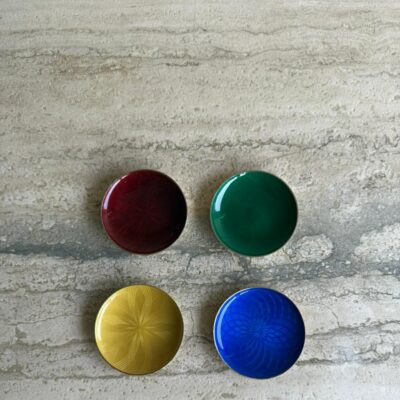
A set of four mid-century sterling silver dishes by the Norwegian jeweller and silversmith J. Tostrup, each decorated with a guilloché enamel surface. Marked Sterling, J. Tostrup, Norway to the reverse, the set reflects the firm’s reputation for precision workmanship and refined decorative detail, qualities that made Tostrup a leading name in Scandinavian silver throughout the 20th century.
6.5cm ⌀ each
-
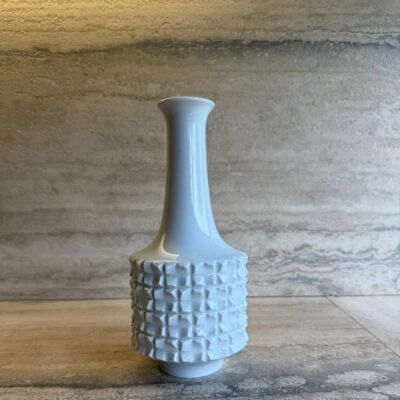
A mid-century porcelain vase designed by Ludwig Zepner for Meissen in the 1960s, marked with the Meissen crossed swords to the base. Of tapering cylindrical form, the piece reflects Zepner’s restrained approach to shape, allowing the purity of Meissen porcelain to take precedence over ornament.
11cm ⌀ × 24cm H
-
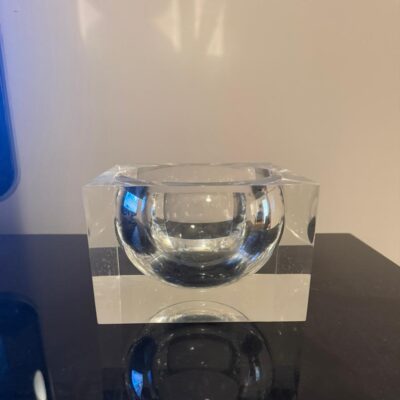
Dating to the 1970s, this lucite bowl captures the era’s fascination with new materials and their sculptural possibilities. The clarity and refraction of the acrylic give the piece a shifting presence, its form animated by changes in light and shadow.
18cm W × 18cm D × 11.5cm H
-
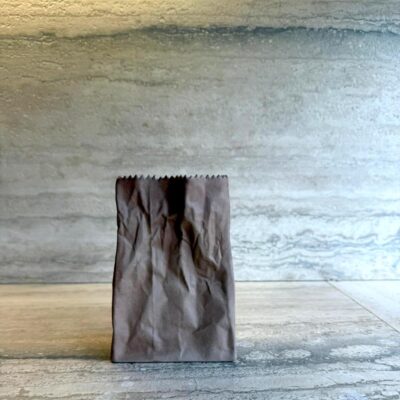
A sculptural ceramic vase by Tapio Wirkkala, produced in the 1970s by Rosenthal’s Studio Line in Germany. This is an early edition, marked to the base Rosenthal, Studio Linie, Germany. One of the designer’s most iconic forms, the Paper Bag plays with illusion and material—rendering the delicate crumple of paper in crisp ceramic with masterful restraint.
10cm W × 7cm D × 15cm H
-
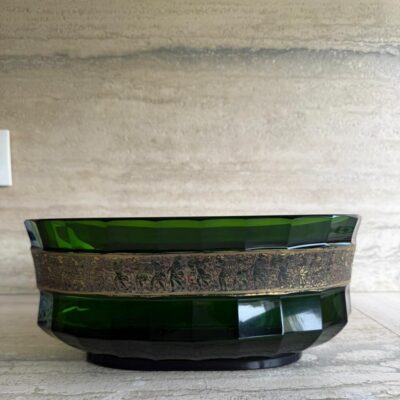
An early 20th-century crystal centrepiece by Moser, produced in Karlsbad, Czechoslovakia between 1918 and 1922. Marked on the base in diamond point: Made in Czechoslovakia, Moser, Karlsbad. The bowl is richly decorated with a wide frieze of marching warriors, rendered in gold against the clarity of cut crystal—a commanding motif that bridges Art Nouveau ornament with historicist themes.
30cm W × 16cm D × 13cm H
-
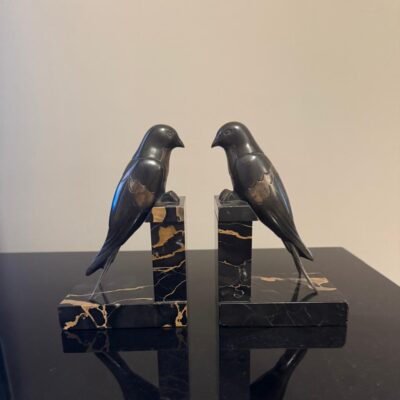
A finely cast pair of French Art Deco bookends, dating to the 1930s and attributed to Suzanne Bizard—one of the rare women sculptors of the period. Executed in patinated bronze and mounted on black marble bases, each piece is decorated with a stylised bird, emblematic of the era’s fascination with both nature and abstraction.
10cm W × 7cm D × 15cm H
-
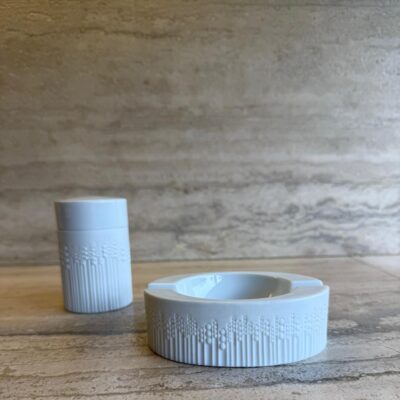
Designed by Finnish master Tapio Wirkkala for Rosenthal’s Studio Line, this pairing captures the sculptural purity and tactile allure that define his work. Produced in porcelain, the Pearl Drops design translates the organic softness of nature into objects of quiet refinement, equally at home as functional pieces or as sculptural accents.
Trinket box: 6cm Ø × 9cm H
Ashtray: 12cm W × 9cm D × 4cm H
Marked: Rosenthal Studio Linie, Germany -
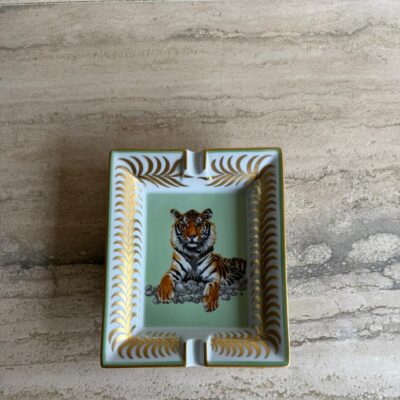
A hand-painted porcelain tray by Hermès, produced in Limoges and decorated in gold and green with the Tigre Royal motif. The design centres on a richly detailed tiger’s head, framed by a gilded border. Limoges porcelain has long been favoured by Hermès for its refinement of surface and depth of colour, and in this example the precision of the painting underscores the house’s meticulous approach to decorative objects.
20cm W × 16cm D × 3.5cm H
-
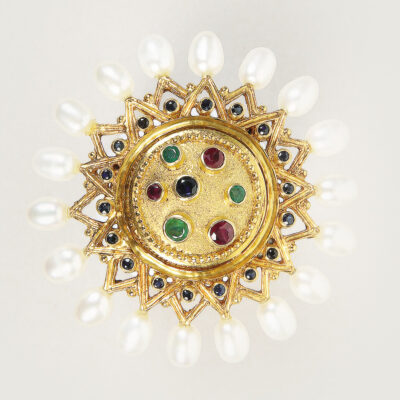
Ilias LALAOUNIS Greek jeweller Grecian shield brooch 18 carat yellow gold ruby, blue sapphire, emerald and cultured pearl weight 15.5 gr. 4.5 cm diameter
-
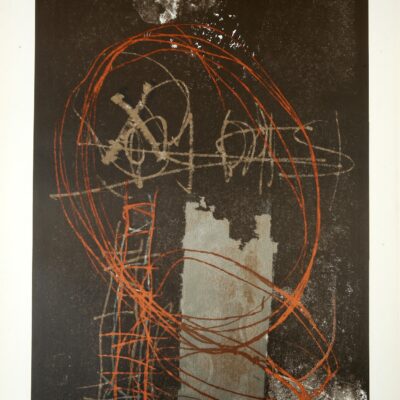
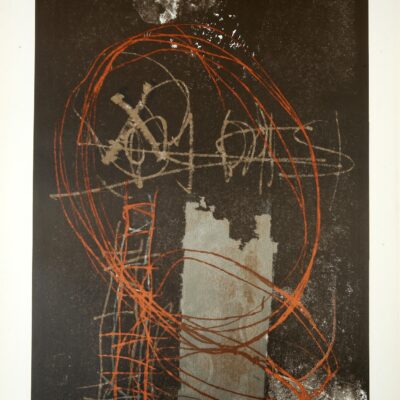
Yiannis SPYROPOULOS Greek, 1912-1990 Abstract silkscreen on paper signed lower right numbered 194/240 lower left 70 x 50 cm unframed